


TexasHooch
-
Posts
2389 -
Joined
-
Last visited
Content Type
Profiles
Forums
Store
Downloads
Recruiting - 2020
2019-2020 Football Season
Football
Entertainment
Sports
News and Business
Cloak Room
Transfer Portal
Recruiting
Events
Posts posted by TexasHooch
-
-
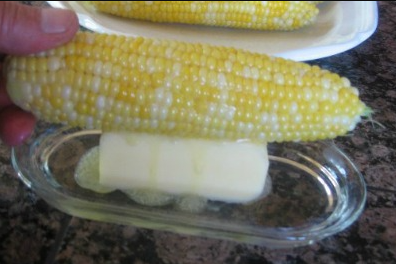
You corn-cobbed a stick, didn't you.

-
 1
1
-
-
I'm cheating this time.
-
 1
1
-
 1
1
-
-
No budget specified. Bold strategy Cotton. https://cutleryandmore.com/products/miyabi-black-slicing-knife-36906
-
6 hours ago, KYHorn said:
I had GPT 5.1 analyze the original text of the 28 point plan to determine if it was original English or translated from another language (I kept my prompt vague). Here is what it determined:
Original text (from the Financial Times):
1. Ukraine’s sovereignty will be confirmed.
2. A comprehensive and comprehensive [sic] non-aggression agreement will be concluded between Russia, Ukraine and Europe. All ambiguities of the last 30 years will be considered settled.
3. It is expected that Russia will not invade neighbouring countries and NATO will not expand further.
4. A dialogue will be held between Russia and NATO, mediated by the United States, to resolve all security issues and create conditions for de-escalation in order to ensure global security and increase opportunities for cooperation and future economic development.
5. Ukraine will receive reliable security guarantees.
6. The size of the Ukrainian Armed Forces will be limited to 600,000 personnel.
7. Ukraine agrees to enshrine in its constitution that it will not join NATO, and NATO agrees to include in its statutes a provision that Ukraine will not be admitted in the future.
8. NATO agrees not to station troops in Ukraine.
9. European fighter jets will be stationed in Poland.
10. US guarantee:
The US will receive compensation for the guarantee.
If Ukraine invades Russia, it will lose the guarantee.
If Russia invades Ukraine, in addition to a decisive coordinated military response, all global sanctions will be reinstated, recognition of the new territory and all other benefits of this deal will be revoked.
If Ukraine launches a missile at Moscow or St. Petersburg without cause, the security guarantee will be deemed invalid.
11. Ukraine is eligible for EU membership and will receive short-term preferential access to the European market while this issue is being considered.
12. A powerful global package of measures to rebuild Ukraine, including but not limited to:
a. The creation of a Ukraine Development Fund to invest in fast-growing industries, including technology, data centres, and artificial intelligence.
b. The United States will cooperate with Ukraine to jointly rebuild, develop, modernise, and operate Ukraine’s gas infrastructure, including pipelines and storage facilities.
c. Joint efforts to rehabilitate war-affected areas for the restoration, reconstruction and modernisation of cities and residential areas.
d. Infrastructure development.
e. Extraction of minerals and natural resources.
f. The World Bank will develop a special financing package to accelerate these efforts.
13. Russia will be reintegrated into the global economy:
a. The lifting of sanctions will be discussed and agreed upon in stages and on a case-by-case basis.
b. The United States will enter into a long-term economic cooperation agreement for mutual development in the areas of energy, natural resources, infrastructure, artificial intelligence, data centres, rare earth metal extraction projects in the Arctic, and other mutually beneficial corporate opportunities.
c. Russia will be invited to rejoin the G8.
14. Frozen funds will be used as follows: $100 billion in frozen Russian assets will be invested in US-led efforts to rebuild and invest in Ukraine. The US will receive 50% of the profits from this venture. Europe will add $100 billion to increase the amount of investment available for Ukraine’s reconstruction. The remainder of the frozen Russian funds will be invested in a separate US-Russian investment vehicle that will implement joint projects in specific areas. This fund will be aimed at strengthening relations and increasing common interests to create a strong incentive not to return to conflict.
15. A joint American-Russian working group on security issues will be established to promote and ensure compliance with all provisions of this agreement.
16. Russia will enshrine in law its policy of non-aggression towards Europe and Ukraine.
17. The United States and Russia will agree to extend the validity of treaties on the non-proliferation and control of nuclear weapons, including the START I Treaty.
18. Ukraine agrees to be a non-nuclear state in accordance with the Treaty on the Non-Proliferation of Nuclear Weapons.
19. The Zaporizhzhya [sic] Nuclear Power Plant will be launched under the supervision of the IAEA, and the electricity produced will be distributed equally between Russia and Ukraine — 50:50.
20. Both countries undertake to implement educational programmes in schools and society aimed at promoting understanding and tolerance of different cultures and eliminating racism and prejudice:
a. Ukraine will adopt EU rules on religious tolerance and the protection of linguistic minorities.
b. Both countries will agree to abolish all discriminatory measures and guarantee the rights of Ukrainian and Russian media and education.
c. All Nazi ideology and activities must be rejected and prohibited.
21. Territories:
a. Crimea, Luhansk and Donetsk will be recognised as de facto Russian, including by the United States.
b. Kherson and Zaporizhzhia will be frozen along the line of contact, which will mean de facto recognition along the line of contact.
c. Russia will relinquish other agreed territories it controls outside the five regions.
d. Ukrainian forces will withdraw from the part of Donetsk Oblast that they currently control, and this withdrawal zone will be considered a neutral demilitarised buffer zone, internationally recognised as territory belonging to the Russian Federation. Russian forces will not enter this demilitarised zone.
22. After agreeing on future territorial arrangements, both the Russian Federation and Ukraine undertake not to change these arrangements by force. Any security guarantees will not apply in the event of a breach of this commitment.
23. Russia will not prevent Ukraine from using the Dnieper River for commercial activities, and agreements will be reached on the free transport of grain across the Black Sea.
24. A humanitarian committee will be established to resolve outstanding issues:
a. All remaining prisoners and bodies will be exchanged on an ‘all for all’ basis.
b. All civilian detainees and hostages will be returned, including children.
c. A family reunification programme will be implemented.
d. Measures will be taken to alleviate the suffering of the victims of the conflict.
25. Ukraine will hold elections in 100 days.
26. All parties involved in this conflict will receive full amnesty for their actions during the war and agree not to make any claims or consider any complaints in the future.
27. This agreement will be legally binding. Its implementation will be monitored and guaranteed by the Peace Council, headed by President Donald J. Trump. Sanctions will be imposed for violations.
28. Once all parties agree to this memorandum, the ceasefire will take effect immediately after both sides retreat to agreed points to begin implementation of the agreement.
GPT 5.1 analysis:
Below is a linguistic analysis of whether the document (or parts of it) appears to be a translation rather than originally written in English. I focus on lexical choices, syntax, formulaic expressions, coherence issues, and calques typical of translations from Slavic languages (especially Russian or Ukrainian), as well as EU-bureaucratic English.
Overall Judgment
Yes — this text very likely began life in another language, and there are multiple strong indicators that it is translated, probably from Russian (most likely) or possibly Ukrainian, with some portions influenced by EU-legal/administrative phraseology.
It does not read like an original English diplomatic memorandum. The signals of translation appear consistently throughout the document.
Key Linguistic Indicators of Translation
1. Repetition and unnatural phrasing
“A comprehensive and comprehensive [sic] non-aggression agreement…”
-
The duplication is not native English.
-
This kind of repetition is common in machine-translated or poorly edited texts where two similar adjectives were present in the source and translated literally.
“All ambiguities of the last 30 years will be considered settled.”
-
Native English would say “disputes,” “issues,” or “outstanding matters.”
-
“Ambiguities” is a calque from Russian/Ukrainian bureaucratic language (“неоднозначности,” “неясности”).
2. Frequent Slavic bureaucratic calques
“guarantee will be deemed invalid”
-
In English diplomatic writing: “the guarantee will lapse,” “will be void,” “will be forfeited.”
-
“Deemed invalid” is overly literal and resembles Russian считаться недействительной.
“A powerful global package of measures”
-
This is not natural native English phrasing.
-
Direct calque of мощный глобальный пакет мер.
“Relinquish other agreed territories”
-
“Relinquish” is unusual in this specific context; a Slavic-language original might use “откажется от” (“renounce”).
“frozen along the line of contact”
-
Native English would say “remain fixed along the line of contact” or “the boundary will be frozen at the current line of contact.”
-
Calque structure.
3. Unnatural sequence and structuring
The list feels like it was organized according to source-language logic, not English drafting conventions:
-
Overuse of numbered subpoints (Slavic and EU style).
-
Dense, bureaucratic stacking of clauses.
-
Inconsistent detail level (e.g., suddenly specifying “100 days” for elections but vague elsewhere).
4. Lexical choices that feel translated
Several terms are used in ways that do not feel idiomatic in English diplomatic/legal drafting:
-
“all global sanctions will be reinstated”
→ Typically “reimposed,” not “reinstated.” -
“future economic development”
→ Redundant; reads like a direct translation of будущее экономическое развитие. -
“extraction of minerals and natural resources”
→ Redundant (minerals are natural resources). Literal translation. -
“Zaporizhzhya Nuclear Power Plant will be launched…”
→ “Launched” is incorrect; English would say “restarted,” “brought back online.”
→ “Launched” matches Russian “запущен.”
5. Explicit legalistic formulations typical of translations
Examples:
-
“This agreement will be legally binding.”
-
“Sanctions will be imposed for violations.”
-
“undertake to implement”
-
“undertake not to change these arrangements by force”
These are not wrong, but the cumulative density is characteristic of translated intergovernmental legal texts, not original English drafting.
6. Specific calques from Russian diplomatic language
“freeze” used as verb for territory
Russian uses заморозить конфликт / заморозить линию much more frequently and literally than English.
“de facto recognised”
English would more often say:
-
“recognized as de facto Russian control,”
not recognised as de facto Russian.
The phrasing aligns with Russian syntactic patterns.
“All Nazi ideology and activities must be rejected and prohibited.”
This is typical rhetorical phrasing found in Russian state documents.
7. Inconsistency and odd register shifts
At times, phrases jump from legalistic to colloquial:
-
“fast-growing industries, including technology”
-
“mutually beneficial corporate opportunities”
This mixed register is common in texts that are translated or compiled from multilingual sources.
Conclusion
Strong likelihood: The document (or major portions of it) is a translation, very probably from Russian, possibly Ukrainian, and influenced by EU-bureaucratic drafting styles.
If I had to estimate:
-
70–80% probability: originally written in Russian.
-
20–30% probability: originally in Ukrainian, but the structure matches Russian diplomatic drafting more closely.
-
Almost 0% probability: originally written in idiomatic English.
Interesting.
I did a similar prompt with Gemini:
It is highly likely that this text was originally written in another language (most likely Russian) and then translated into English, or at the very least, it is a rough draft heavily influenced by non-native speakers.
Based on linguistic markers and the specific errors included in the text you provided (such as the
[sic]markers), here is the evidence that points to translation:1. The "Comprehensive and Comprehensive" Error
The phrase in Point 2, "A comprehensive and comprehensive [sic] non-aggression agreement," is a classic "translation stutter."
-
Likely Origin: In Russian diplomatic correspondence, a standard phrase is "полное и всеобъемлющее" (polnoye i vseob'yemlyushcheye), which translates to "full and comprehensive."
-
The Glitch: A machine translation tool or a fatigued human translator likely translated both distinct Russian adjectives into their closest English equivalent ("comprehensive") without catching the redundancy. The fact that your text includes
[sic]indicates that the English editor noticed this error but left it in to preserve the original document's exact wording.
2. Transliteration of "Zaporizhzhya"
In Point 19, the text uses the spelling "Zaporizhzhya".
-
The Clue: Standard English diplomatic texts (like those from the US State Department or UK Foreign Office) typically use the BGN/PCGN standard spelling "Zaporizhzhia" (ending in -ia).
-
The Origin: The -ya ending is a direct transliteration of the Cyrillic ending (я), which is common when translating directly from Ukrainian (Запоріжжя) or Russian (Запорожье) without using a standardized English style guide. The inclusion of
[sic]again suggests the editor flagged this as non-standard spelling.
3. Grammatical Structure & Tone
The sentence structure throughout the document relies heavily on passive voice and bureaucratic phrasing that mirrors Slavic syntax rather than native English diplomatic writing.
-
Example (Point 1): "Ukraine’s sovereignty will be confirmed." A native English drafter would likely write "The Parties shall confirm..." or "Russia and the US affirm..." The passive "will be confirmed" is a direct mapping of reflexive Russian verbs (e.g., подтвердится).
-
Example (Point 10): "If Ukraine launches a missile... without cause." The phrase "without cause" is legally vague in English. In Russian, there might be a more specific term like безосновательно (groundlessly) which makes more sense in a civil law context but translates poorly into a common law contract.
4. "False Friend" Concepts
Some concepts appear to be translated literally rather than localized for Western diplomatic understanding.
-
"Educational programmes... in schools and society": This phrasing (Point 20) echoes Soviet or post-Soviet bureaucratic language regarding "social engineering" or state-mandated ideology, which is less common in American legal drafts.
-
"The US will receive compensation for the guarantee": This is blunt and transactional language ("compensation") that sounds like a direct translation of a business term (possibly компенсация or возмещение), whereas a native US English draft would likely use terms like "cost-sharing," "burden-sharing," or "financial offset."
Conclusion
The text is almost certainly a translation of a draft proposal originating from Russian negotiators or a non-native English speaking working group. The specific errors (redundant adjectives, non-standard transliteration) are "fingerprints" of a document that was thought out in Russian and processed into English, likely with some reliance on automated translation tools or non-native drafting.
-
 3
3
-
-
14 minutes ago, Jerry Callo said:
Yeah. I either wet brine or dry brine. When using a wet brine, I rinse, season, then cook with no dry out in between.
Oh, I definitely dry out after a wet brine. I just don't add anything to it yet, aside from the aforementioned butter under the skin. Honestly though, I really don't think doing that before the dry vs right before the cook makes that much difference. What does though, for me, is getting under the skin to separate it some from the bird. Again though, I spatchcock so it's pretty easy to do. Might be harder with a complete bird.
-
It can be done in combination with a dry brine, or subsequent to a wet brine. I wouldn't personally do both. The closest I've done after a wet brine is herb butter under the skin.
-
1
-
-
Just now, South Austin said:
Not doing anything particularly adventurous with my turkey this week, except I'm going to try a method in a Thomas Keller recipe that calls for air drying in the fridge after an overnight brine for 24 hours before roasting. It's supposed to produce a crispier skin. Anyone ever try that?
I always spatchcock, but yes. It works, particularly if you take the effort to pat dry really well, including under the skin of the breast and use a wire rack. Make sure your fridge is free of the odors of other food though, because it'll absorb them.
-
1
-
-
The prompt is best cast, not most well casted (that may not be a word, but work with me). If it were the latter, I may go with The Big Chill or Dead Poets Society, in which both had mostly relative unknowns. If we're just talking about most talented cast in a single movie, Mars Attacks is just a notch below the big super hero movies.
-
I didn't love the movie, but Mars Attacks has to be in the conversation:
Jack Nicholson, Glenn Close, Annette Bening, Pierce Brosnan, Danny DeVito, Martin Short, Sarah Jessica Parker, Michael J. Fox, Rod Steiger, Tom Jones, Lukas Haas, Natalie Portman, Jim Brown, Lisa Marie, Sylvia Sidney, Jack Black, Pam Grier, Paul Winfield, Christina Applegate,
-
1
-
-
Wordle 1,613 2/6
⬜🟩🟩⬜🟩
🟩🟩🟩🟩🟩-
2
-
1
-
 5
5
-
-
26 minutes ago, Pato del Muerto said:
Do you have “buy in warehouse”selected in the filters?
just poked around, maybe you are right that the butcher cuts aren’t online. Buy in warehouse serves things like frozen burger patties when I search for something more specific like ribeye or sirloin I don’t even get the buy in warehouse option in the filter tab.
Yup. That filter should absolutely work, but it doesn't. The closest I've gotten is to pick same day or 2 day delivery, and poke around that way. They make it clear though that those prices are higher because they have the fees baked in.
-
This is, perhaps, a really stupid question, but how do I find out in-store meat prices at costco without going there? When I go to grocery on the website all I see is the online-only stuff.
-
15 minutes ago, MirrOlure said:
Wordle 1,604 4/6*
⬛🟨⬛⬛⬛
⬛⬛⬛⬛🟩
⬛🟩⬛🟩🟩
🟩🟩🟩🟩🟩
So is someone going to tell me what the fuck this word means?
Spoiler-
1
-
3
-
-
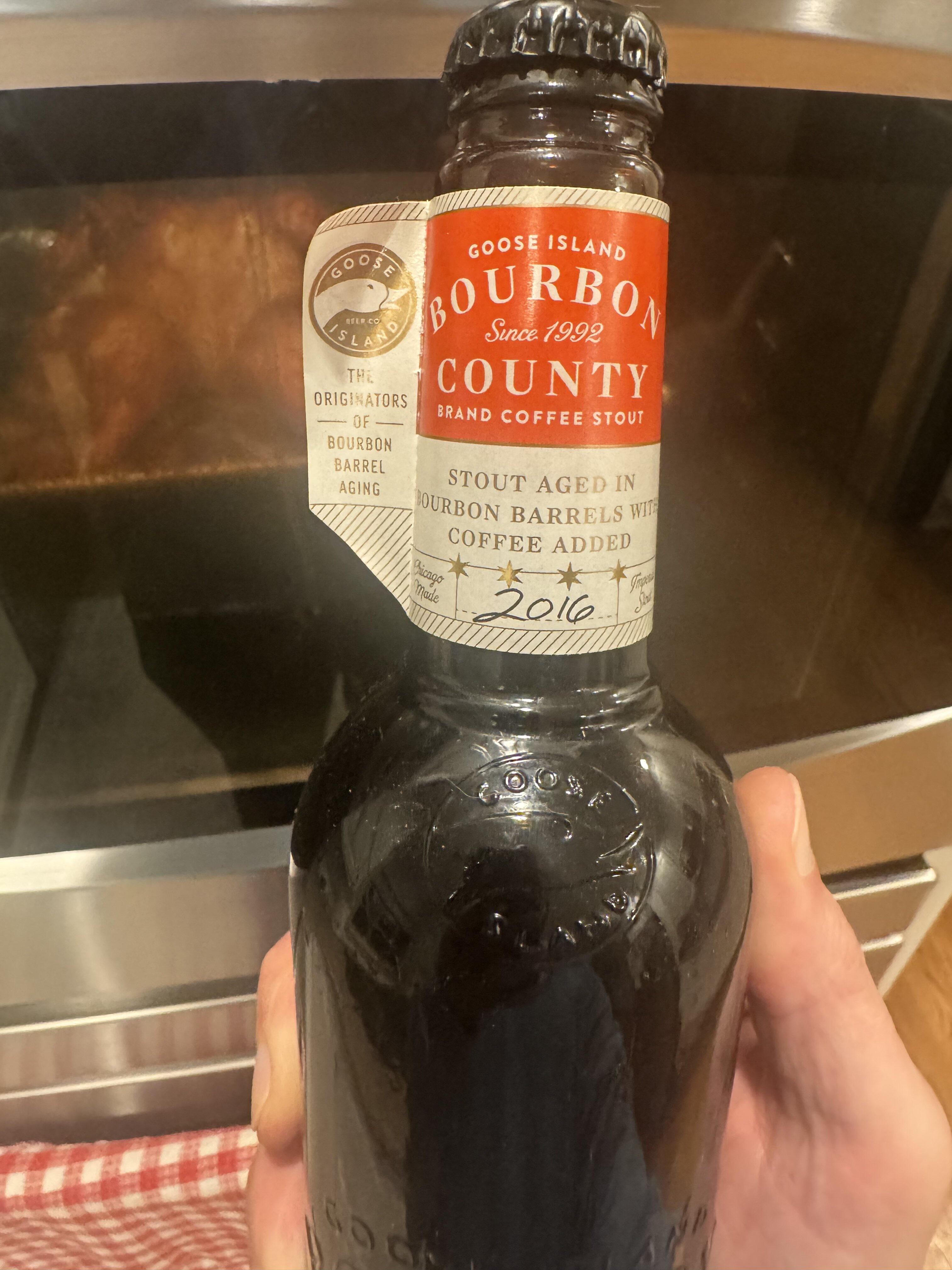
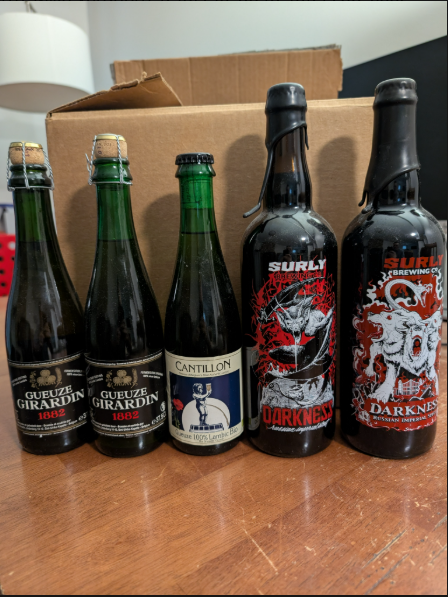
On 10/27/2025 at 6:30 PM, That Guy said:
Kinda forgot about a few bottles. Gonna give this a go…
Oh man, you just reminded me that I had some beer left in the cellar. It's been years.
2012, 2013, 2011(!), 2015, 2016
-
2
-
1
-
1
-
-
Wordle 1,594 4/6
⬜⬜⬜🟨🟩
⬜🟩🟩🟩🟩
⬜🟩🟩🟩🟩
🟩🟩🟩🟩🟩-
5
-
2
-
-
I have a lot of gadgets that I love. A long spatula. My garlic press. Some microwave safe ramekins. My one egg fry pan...
Honestly though, beyond appliances, the honest answer has got to be my paper towel dispenser. I use those bitches for everything.
-
4 minutes ago, TexasHooch said:
I said wow 9 times tonight. One fully extended shovel pass, one left handed throw under pressure, and 7 sacks.
make that 9 sacks
-
4 minutes ago, closetojumping said:
I’m not saying Raiola sucks, but I’m a year and a half into watching the guy and I just rarely find myself saying “wow!” while watching him.
I said wow 9 times tonight. One fully extended shovel pass, one left handed throw under pressure, and 7 sacks.
-
1
-
-
Temu Mahomes holds on to the ball too long.
-
5 hours ago, scottsins said:
My deposit is still pending with e-trade so UURAF, etc. are off the table for a bit.Lucky bastard.
-
23 hours ago, Harrison Stafford said:
Bought 9,000 shares GPHOF (graphite) at $1.32.
I did about 8500 shares yesterday, but managed to get it at 1.17. I'm trying to decide whether to swing or sit.
-
3 hours ago, Bozo_Casanova said:
Sir, I’ll have you know I woke up at 5:45 thinking about Chasey Lain.
Was it a dream
Or a nightmare
-
2
-
2
-
-
Well that's deflating.
-
2
-
-
5 hours ago, Horn80 said:
Vikings are such colossal chokers that you have to hate them.




The Turkey Thread
in Food and Travel
Posted
Getting there. Breasts are ready for the wrap. Started on the pellet grill, but it's under 20 here, so switched to the 26 kettle.