Jump to content
View in the app

A better way to browse. Learn more.

Surly Horns

A full-screen app on your home screen with push notifications, badges and more.

To install this app on iOS and iPadOS
  1. Tap the Share icon in Safari
  2. Scroll the menu and tap Add to Home Screen.
  3. Tap Add in the top-right corner.
To install this app on Android
  1. Tap the 3-dot menu (⋮) in the top-right corner of the browser.
  2. Tap Add to Home screen or Install app.
  3. Confirm by tapping Install.
Football ... Basketball ... Baseball ... Other Sports ... Futbol ... 🤫995🤫 ... Gambling ... Movies & TV ... Music ... Hobbies ... Lulz ... Food & Travel ... Daily Texan ... Business & Markets ... Cloak Room ... Help ... For Sale ... Board Discussion ... Advertise... Tailgate Donations

Featured Replies

1 minute ago, Chopper said:

Things still not going well in Venezuela

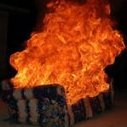
Dumpster Fire GIF

Y'all realize we'd actually be in a much more sensible position, with more common-sense, decent, and benevolent leadership....if we'd simply turned over the leadership of the country to the ExxonMobil BOD on January 20th, right?

  • Replies 2k
  • Views 118.7k
  • Created
  • Last Reply

Top Posters In This Topic

Most Popular Posts

  • Carrizo Chorizo
    Carrizo Chorizo

    Trump has focused heavily on foreign policy to his own detriment. I wish he would focus more domestically, but what can I do? Let's go way back to January 2025. What was one of the first big push

  • Do you not see any upside in taking out the dictator of a socialist regime that is actively cooperating with our three biggest adversaries, has large amounts of natural resources, has a significant ro

  • aggie08
    aggie08

    So, just so we're clear on your logical consistencies: Supplying weapons and funding to a sovereign nation who was invaded unprovoked by a country with a heavily vested interest in destabilizing the

Posted Images

30 minutes ago, Chopper said:

Things still not going well in Venezuela

To be fair, he's just trying to get the federal govt to front the entire cost. Then it will be very investable.

Trump reveals how long he expects US to control Venezuelan oil

President Donald Trump said the United States would extract oil from Venezuela and market it globally for years, in an interview with the New York Times.

“We will rebuild it in a very profitable way,” Trump said during the nearly two-hour meeting. “We’re going to be using oil, and we’re going to be taking oil. We’re getting oil prices down, and we’re going to be giving money to Venezuela, which they desperately need.”

Asked how long the U.S. administration of the oil industry could last, Trump said longer than a year.

“I would say much longer,” Trump said.


China is owed a lot of oil. Is Trump willing to fuck around any more with Chinese trade in an election year?

Trump's Venezuela oil plan may clash with China debt | AP News

Trump is too incompetent and reckless to manage even the Kennedy Center or a building renovation. I don't think stealing VZ's oil is going to go so well. Call me crazy.

9 minutes ago, Chopper said:

Trump is too incompetent and reckless to manage even the Kennedy Center or a building renovation. I don't think stealing VZ's oil is going to go so well. Call me crazy.

He's great at knocking things down, and pretty shit at building anything to last

18 hours ago, Beau Vine said:

To be fair, he's just trying to get the federal govt to front the entire cost. Then it will be very investable.

Maybe, but then it would be only to appease Trump. VZ cannot ramp up production fast enough, or cheaply enough, to provide a decent return without $90 oil. I do not know why anyone would waste their time when everything Trump has done can easily be reversed by a new admin and/or any VZ admin that just nationalizes again. No CEO should want to take that risk.

how it began

Screenshot 2026-01-10 at 3.27.55 PM.png

how it's going

Screenshot 2026-01-10 at 3.29.24 PM.png

I hope a few big shots are in-country to check out the investment potential. If we're lucky, Paul Singer's already there.

9 hours ago, Chopper said:

Trump is too incompetent and reckless to manage even the Kennedy Center or a building renovation. I don't think stealing VZ's oil is going to go so well. Call me crazy.

Dude bankrupted six casinos...

Wait till that security guard hears that Americas‘s secret weapon was cash paid to somebody close to Maduro.

Can Trump Make Venezuela an Oil Giant Again?

Can Trump Make Venezuela an Oil Giant Again?

The president wants U.S. oil companies to return in a big way, but the petrostate’s turbulent history suggests formidable challenges ahead.

Share

Resize


Listen

(3 min)

The El Palito refinery rises above Puerto Cabello, Venezuela.

A refinery in Puerto Cabello, Venezuela. Experts estimate that bringing the country back to peak oil production would cost $100 billion or more. Matias Delacroix/Associated Press

By

Daniel Yergin

Jan. 9, 2026 11:00 pm ET

“No one was paying any attention to Venezuelan oil two weeks ago,” a longtime oilman said to me the other day, “but now everyone is.” Donald Trump made that happen. Following the dramatic seizure of dictator Nicolás Maduro by American forces on Jan. 3, the president declared that the U.S. would take control of the country’s oil industry, with Venezuela turning over 30 to 50 million barrels for the U.S. to sell, the proceeds being used “to benefit the people of Venezuela and the United States!”

But that’s just the beginning. Trump has made clear that he wants U.S. oil companies to return to Venezuela in a big way. 

There’s certainly plenty of oil to be produced there. Venezuela holds the largest reserves in the world, more than Saudi Arabia and the U.S., and for decades was one of the stars of the oil world. But recent years have brought a crushing descent. Venezuela has been producing well under a million barrels a day—less than North Dakota—and accounts for less than 1% of world oil production.

Estimates range widely for what it would cost to bring back the industry. One reasonable guess is $20 billion to boost Venezuela’s output to 1.5 million barrels a day from the 870,000 barrels it produced in November. To get back to the 3.4 million barrels a day of peak production at the end of the 1990s could cost $100 billion or even more, including new facilities, infrastructure and environmental remediation.

But what will it take to persuade companies to make such big bets on Venezuela again? The country’s state-owned oil company, devastated by years of corruption and political turbulence, doesn’t have the money or technology for a recovery, let alone a massive upgrade. The international oil companies who do will want to be confident about security, regulation and the legal foundations of their investment, given that Venezuelans across the spectrum—including most of the 70% of the public that voted against Maduro in the last election—believe the country’s oil resources belong to the nation and are essential to the recovery of their battered economy. Any real plan for reviving Venezuela’s oil industry has to reckon with the political legacy of the country’s long, turbulent history with its petro riches.  

From ‘mirage’ to oil boom

The hunt for oil in Venezuela began before World War I in unmapped jungles whose hazards included giant mosquitoes, malaria and hostile native tribes. One driller, sitting on the porch of a mess hall, was killed by an arrow fired from the nearby jungle. The results of the hunt were so disappointing that in 1922 an American geologist dismissed the country’s petroleum prospects as a “mirage.”

Speedboat among gas and oil drilling platforms on Lake Maracaibo, Venezuela, in 1948.

Venezuelan drilling platforms in 1948, when the country’s reformist government established a 50/50 profit-sharing deal with oil companies. INTERCONTINENTALE/Agence France-Presse/Getty Images

But as has so often happened in the history of oil, when just about everyone is about to give up on a new geography, a discovery proves them wrong. Later that same year, Royal Dutch Shell, the Anglo-Dutch company, found an oil field so huge that the initial well flowed at 100,000 barrels a day. That set off an oil rush that drew in more than a hundred U.S. and British groups. An oil boom engulfed the country. Within seven years, Venezuela had gone from nothing to become the second-largest oil producing country in the world, behind only the U.S.

Oil became the foundation of the economy, generating 90% of export earnings. No one benefited from the boom more than the country’s dictator, the avaricious and brutal General Juan Vicente Gomez, and his family. They showed remarkable business acuity in selling the rights to new oil concessions to companies eager to get into the game.

By the late 1940s, more than a decade after the death of Gomez, a reformist group won control of the government and demanded a new arrangement with the oil companies. In a deal partly brokered by the U.S. government, oil proceeds were divided on a “50/50 principle,” with companies paying taxes and royalties to the government equal to half their net profits on the oil. 

The new terms, plus expanding production, led to a sixfold increase in government revenues and contributed substantially to the country’s impressive postwar economic development. There could be no doubt that Venezuela was now well established as a petrostate.

Portrait of Venezuelan dictator Juan Vicente Gomez in uniform.

No one benefited from Venezuela’s oil boom more than the brutal dictator Juan Vicente Gomez, who ruled the country from 1908 to 1935. ullstein bild/Getty Images

But the 50/50 deal didn’t last long. Nationalism would change the balance, with Venezuela passing a law in 1958 to increase its share to about 60%. In 1959 and 1960, international oil companies, facing a surge of new supplies from the Soviet Union, cut prices. That in turn reduced the income of the other oil-exporting countries. In response, an infuriated Venezuela took the lead with Saudi Arabia in establishing a new organization called the Organization of Oil Exporting Countries—better known as OPEC—to defend their interests.  

OPEC and rising demand

OPEC’s founding was a sign of what was to come. As markets tightened in the late 1960s and early 1970s in the face of rising demand, a wave of nationalism swept over oil-producing countries. Venezuela nationalized the companies’ positions, not through confrontation, as in some other countries, but by a process of tough negotiation. Longstanding oil concessions were fashioned into four government-owned operating companies, staffed by Venezuelan nationals who had been trained and worked in the international companies. The new state companies kept their links to the former owners in order to maintain technical skills and to make sure the oil could get to market.

The four operating companies were under the national oil company, PdVSA, which existed both for coordination and, importantly, to provide a buffer between politicians and the operating companies, to guard them against political interference and to reduce corruption. When I visited Caracas in the 1990s, meeting with PdVSA and its subsidiaries was like meeting with any other professionally run international company.

But at that moment the Venezuelan economy was already in deep trouble. Population had doubled in just two decades, per capita incomes had fallen, and inflation was high. The only obvious way to bolster the economy quickly was to increase oil earnings, and the only way to do that was by substantially boosting output. But PdVSA could not do it alone. It had neither the investment capital nor the technology.

The country’s answer during the 1990s was the Apertura Petrolera, the oil opening. International companies were invited to come back to Venezuela, bring their technology and investment, and work once again directly, not as owners of concessions but rather as partners and operators. The plan met violent opposition. Nationalists charged that the sovereignty of Venezuela was being violated once again and that control of the country’s oil, which had been wrested away from foreign companies, would be undermined.

"Peace Monument" sculpture outside the PDVSA headquarters in Caracas, featuring a hand holding an oil derrick.

The ‘Peace Monument’ sculpture outside the headquarters of Venezuelan state-owned oil company PdVSA. federico parra/Agence France-Presse/Getty Images

No one more vocally opposed the Apertura than a charismatic army colonel named Hugo Chávez, who had been imprisoned after leading a coup in 1992. By the time of the 1998 presidential election, the country’s economic crisis had become worse: The price of oil, the lifeblood of the economy, had collapsed to $10 a barrel. Running as an outsider, Chavez, amnestied from prison only four years earlier, won the presidency, though with a total turnout of just 36%.

Once in power, Chavez wasted little time in dismantling the democratic system, centralizing all power in his hands and that of his clique, under the rubric of his “Bolivarian Revolution” and his motto “socialism for the 21st century.” He rewrote the constitution, eliminated one house of parliament, undermined the supreme court and took direct control of PdVSA and its enormous revenues.  

Cuba’s influence

Cubans arrived to help Chavez cement his control. Parents decried the “Cubanization” of school textbooks, and Chavez took to playing ball—literally—with Fidel Castro, pitching against him in a game in Havana. Castro’s team won 5 to 4. More important, Cuba won subsidies and oil supplies from Venezuela, a lifeline for its own economy. Castro blessed Chavez as his political son and sent his secret services to help protect the Venezuelan strongman. “There is only revolution and counterrevolution,” Chavez declared. “We are going to annihilate the counterrevolution.”

Chavez had the good fortune of rising oil prices to help bolster his regime, but by 2002 most Venezuelans had grown weary of his increasingly dictatorial rule. Mass opposition and a coup briefly deposed him, but after three days under guard on a military island, he helicoptered back to Caracas. At the end of that year a general strike brought the country to a halt. Oil workers stopped working, oil output fell to almost nothing, and exports ceased. The shutdown lasted a couple of months. When it was over, half the workforce was fired.

Fidel Castro speaks with Hugo Chavez during a baseball game.

Fidel Castro chats with Hugo Chavez before a baseball game between the Cuban and Venezuelan teams in 2000. JUAN BARRETO/Agence France-Presse/Getty Images

Most of the foreign investment under the Apertura had gone into the Orinoco Belt, a 54,000-square-mile region, rich with oil, but oil so thick that it would not flow by itself. Before Chavez came to power, a half dozen companies had entered into contracts with PdVSA to produce the oil, which required extra investment and extra technology.

But Chavez would not have it. In 2007, dressed in red fatigues, he descended on the Orinoco to announce “the true nationalization of our natural resources” and thundered, “Down with the U.S. empire.” Behind him was a poster declaring “Full Oil Sovereignty, the Road to Socialism.” Most of the companies left and went into arbitration, which, after lengthy processes, left them with judgments that went largely unpaid.

In 2013, Chavez died and was succeeded by his Vice President Nicolás Maduro, a former bus driver who had risen through the union movement. He had held various jobs under Chavez, including foreign minister, but had none of Chavez’s charisma. What he did have was the capacity to run a highly repressive dictatorship that would imprison and torture opponents or even those who had wandered into a protest on the streets.

He also presided over an economic disaster, as the country, through mismanagement and corruption, suffered simultaneously from both hyperinflation and deep recession. At one point, GDP declined by 35%. By one estimate, 75% of the population was living in poverty. Crime was endemic, and cartels turned drugs into a big business. Out of desperation, eight million of the country’s 30 million fled as economic refugees, mostly to neighboring countries.

Falling production

For decades, Venezuela had been a petrostate. But under Maduro, the country hardly even made the grade. Over the course of his presidency, production fell 60% and was actually 75% lower than when Chavez had come to power.

Venezuelan oil workers demonstrating with a flag, wearing red shirts and hard hats, in support of nationalization in 2007.

Workers in 2007 demonstrating for the nationalization of Venezuela’s oil industry. JUAN BARRETO/Agence France-Presse/Getty Images

For oil companies now thinking of returning to Venezuela, the immediate problem is the wreckage left by Chavez and Maduro. “The oil industry has been in a state of continuing destruction of assets and value because of lack of investment and maintenance, corruption, and political control,” said Juan Szabo, a former senior official of PdVSA.

For two decades, corruption and theft reached from the top of the government down to the field, where unpaid workers sold off drilling equipment and metal from pipelines to pay for food. Talent fled the industry, with many of the most capable managers in exile. And PdVSA itself, once one of the most respected state oil companies in the world, was turned into a political machine and a piggy bank for the regime, which is still very much in power even after Maduro’s arrest.

Some larger companies may return to Venezuela in the hope of somehow collecting billions of dollars of unpaid debts, and some smaller companies and entrepreneurs with a high tolerance for risk will certainly look for opportunities there. But none of this promises a full-scale revival of the once mighty Venezuelan oil industry. For that to happen, there will have to be a more fundamental change in Venezuela’s politics and policies and also in the readiness of companies to make a new deal with a country that, despite the ruin left by Chavez and Maduro, is still committed to the idea that it should control its own oil.

The current situation reminds me of a conversation I had with the CEO of one of the major international oil companies on the eve of the 2003 invasion of Iraq. “You know what I’ll say to the first person in our company who comes to us with a proposal to invest a billion dollars?” he said. He’d ask them about the new regime’s legal and political system, economic and fiscal policies, standards for contracts, arrangements for arbitration and security. “Tell us about all those things,” he added, “and then we’ll talk about whether we’re going to invest or not.”

Venezuela today is very different from Saddam Hussein’s Iraq, and 2025 is not 2003. But similar questions will be on the agenda before billions of dollars of investment start to flow again into Venezuela, and the answers will have to be worked out. That will take time. 

Venezuelan President Hugo Chavez and Foreign Minister Nicolas Maduro at an agreement signing.

Hugo Chavez, left, seen with then Foreign Minister Nicolás Maduro, in 2006. Under Chavez, striking oil workers shut down the industry and output fell to almost nothing. JUAN BARRETO/Agence France-Presse/Getty Images

Daniel Yergin, vice chairman of S&P Global, is the author of “The Prize: The Epic Quest for Oil, Money and Power” and “The New Map: Energy, Climate, and the Clash of Nations.”

Copyright ©2026 Dow Jones & Company, Inc. All Rights Reserved. 87990cbe856818d5eddac44c7b1cdeb8

Appeared in the January 10, 2026, print edition as 'Can Trump Make Venezuela an Oil Giant Again?'.

Join the conversation

You can post now and register later. If you have an account, sign in now to post with your account.

Guest
Reply to this topic...
Football ... Basketball ... Baseball ... Other Sports ... Futbol ... 🤫995🤫 ... Gambling ... Movies & TV ... Music ... Hobbies ... Lulz ... Food & Travel ... Daily Texan ... Business & Markets ... Cloak Room ... Help ... For Sale ... Board Discussion ... Advertise... Tailgate Donations

Configure browser push notifications

Chrome (Android)
  1. Tap the lock icon next to the address bar.
  2. Tap Permissions → Notifications.
  3. Adjust your preference.
Chrome (Desktop)
  1. Click the padlock icon in the address bar.
  2. Select Site settings.
  3. Find Notifications and adjust your preference.