
bolverk
-
Posts
16789 -
Joined
-
Days Won
12
Content Type
Profiles
Forums
Store
Downloads
Recruiting - 2020
2019-2020 Football Season
Football
Entertainment
Sports
News and Business
Cloak Room
Transfer Portal
Recruiting
Events
Everything posted by bolverk
-
I've been hopeful in the past that something would get through to the Russian public. At some point, there will be that final straw, but I'm done with even trying to speculate nowadays.
-
The video is of a Russian soldier filming his dead comrades in a trench, saying the war isn't worth it.
-

corporation for public broadcasting shutting down
bolverk replied to Hagbard Celine's topic in Daily Texan
Agreed, but Baptist should be the more immediate concern. -
corporation for public broadcasting shutting down
bolverk replied to Hagbard Celine's topic in Daily Texan
He’s established a creepy pattern of defending people who prey on children’s minds and bodies. I really hope he's not involved in any youth activities, like the Boy Scouts or Little League Baseball. -
Wordle 1,506 4/6 ⬛🟨⬛⬛⬛ ⬛⬛⬛⬛🟨 🟨🟩🟨⬛🟩 🟩🟩🟩🟩🟩 Connections Puzzle #784 🟨🟨🟨🟨 🟩🟩🟩🟩 🟦🟦🟦🟦 🟪🟪🟪🟪 🙂 Daily Quordle 1287 6️⃣7️⃣ 4️⃣5️⃣ m-w.com/games/quordle/ ⬜🟨⬜🟩⬜ ⬜⬜⬜⬜🟨 ⬜⬜🟨⬜⬜ ⬜🟨⬜⬜🟨 ⬜⬜🟨⬜⬜ ⬜⬜⬜⬜🟩 ⬜🟩🟨🟨⬜ 🟩⬜⬜⬜🟩 ⬜⬜⬜⬜🟨 ⬜⬜🟨⬜⬜ 🟩🟩🟩🟩🟩 ⬜⬜⬜⬜⬜ ⬛⬛⬛⬛⬛ 🟩🟩🟩🟩🟩 ⬜🟨⬜⬜⬜ 🟨🟨⬜⬜🟨 ⬜🟨🟨⬜⬜ ⬜⬜⬜⬜⬜ ⬜⬜⬜⬜🟩 ⬜🟩⬜⬜⬜ 🟩🟩🟩🟩🟩 ⬜⬜⬜🟨⬜ ⬛⬛⬛⬛⬛ 🟩🟩🟩🟩🟩
-
I bet they're gonna have some legendary food at tailgates.
-
Whew! Wordle 1,505 6/6 ⬛⬛🟨🟨⬛ ⬛🟩⬛⬛🟩 ⬛🟩🟩🟩🟩 ⬛🟩🟩🟩🟩 ⬛🟩🟩🟩🟩 🟩🟩🟩🟩🟩 Connections Puzzle #783 🟨🟨🟨🟨 🟦🟦🟦🟦 🟩🟩🟩🟩 🟪🟪🟪🟪 🙂 Daily Quordle 1286 6️⃣7️⃣ 4️⃣5️⃣ m-w.com/games/quordle/ ⬜🟨🟨⬜🟨 ⬜⬜🟨⬜⬜ ⬜⬜⬜⬜⬜ ⬜🟨⬜⬜⬜ ⬜⬜⬜⬜🟩 ⬜🟩⬜🟨⬜ ⬜⬜⬜🟨🟨 ⬜🟨⬜🟩⬜ ⬜⬜⬜⬜⬜ ⬜🟨⬜⬜⬜ 🟩🟩🟩🟩🟩 ⬜🟨⬜⬜⬜ ⬛⬛⬛⬛⬛ 🟩🟩🟩🟩🟩 ⬜⬜🟨⬜🟩 🟩⬜⬜🟨⬜ 🟩🟩⬜⬜🟨 🟨🟩⬜⬜🟩 ⬜⬜⬜⬜⬜ ⬜⬜⬜⬜⬜ 🟩🟩🟩🟩🟩 🟨🟩🟨⬜⬜ ⬛⬛⬛⬛⬛ 🟩🟩🟩🟩🟩
-
All Encompassing Mortgage and Real Estate Thread
bolverk replied to UTPhil2006's topic in Business and Markets
@Dbeasy I've tried to explain this stuff to him a couple of times before, but he completely ignores the explanation. I think he just prefers to live in a conspiratorial fantasy land. There are three things going on with employment numbers and job figures that get published by the BLS. This was my first job out of grad school for a year, so this is all from first-hand experience. Current Employment SURVEY (CES): As you can guess, it's a monthly survey of employers asking how many employees they have at a given time. It's simply an ever-shifting estimate by geography (states and metro areas, not counties) and by industry sector. The first guestimate (that's really what it is because response rates can be low) and the second revised estimate to fill in the gaps later in the same month are done at the STATE level, not done by the feds but reported to them. It can get tricky because it does not account for business openings or closures. Also, the survey is entirely voluntary. So, some employers only intermittently will respond. Quarterly CENSUS of Employment and Wages (QCEW): This is your job count. These data are real, hard figures that are required to be reported on a quarterly basis for each month: headcount and wages by location (states and counties). It's an arduous process that often requires STATE workforce commission staff to call up the HR departments of individual businesses when numbers look funky and don’t match up well with previous reports. Because of all that, there's a six-month lag before they are publicly published. As the actual real job counts come in, the estimates go through a revision process to bring them in line with the hard count, culminating at the end of each fiscal year with the final "benchmarked" numbers, which is a big to-do. Now, both of those above are concerned with JOBS, an important thing to keep in mind. Finally, we have the monthly employment/unemployment figures through a program called Local Area Unemployment Statistics (LAUS). I was not directly involved in this, so I can't say as much. That said, I worked in a giant cubicle farm in a converted warehouse on Rutherford, east of I-35) with other analysts who did this stuff. It's a household survey of people, basically asking them one question: Are you currently employed? I think they get the contact information from folks who've lost a job and have filed for unemployment compensation. At the local level, my impression was that these data are a lot more squishy and are only "benchmarked" once a decade when the US Census results are published. That's because it's the only time analysts can get a real handle on the Civilian Labor Force (persons 16+ years of age) living in a county. So, basically, you have the universe of people over that age (CLF) taken from the decennial Census and whether they have jobs (Employment). You take the difference (Unemployed) and calculate the Unemployment Rate. From there, they just apply household survey results to keep track of the number of unemployed people in each county. The problem is that it often doesn't capture significant population changes in a county, and so by the end of the decade, those figures can be pretty off and aren’t fixed until the next Census comes out. So, the first two (CES and QCEW) programs are all about jobs, while LAUS is all about people. For labor market and economic data geeks, that's an important distinction because a person can hold more than one job at a time. I hope this doesn't seem like I'm lecturing, especially to you Dbeasy, but I just wanted to lay this all out there to provide transparency about how the foundational figures from which just about all employment data are calculated, so folks don't fall back on paranoid (and lazy) conspiracies. -
corporation for public broadcasting shutting down
bolverk replied to Hagbard Celine's topic in Daily Texan
If he were actually "libertarian," even borderline, he'd be up in arms about the assault on civil liberties going on right now. And yet, he's not once voiced concern about any of it.- 438 replies
-
- 20
-

-

-
Trolling the public to “own the libs” is all I've got.
-
Ghislaine "Sgt. Schultz" Maxwell: "I know NOTH-ING"
bolverk replied to Gil Bang's topic in Cloak Room
There's a federal minimum security camp here that's attached to a medium security one. Back in 80s, when it was all just a minimum security facility, we'd hear about prisoners "jumping the curb" out at Club Fed, because there wasn't even a fence. -
If you haven’t ever seen The Battle of Algiers (sounds like you might have), it's a great, great watch and could apply to just about any insurgency. It's also available to stream on HBO.
-
Sounds like you're up in Seattle, so those deadly Lahars that'll eventually get Puyallup shouldn't be much of a concern. And, while Nicole may be further away (Who can say where she really ever is: Austin, Atlanta, Aberdeen WA?), I think I'd rather try to outrun a Lahar than face Nicole near a body of water late at night.
-
Papers, please. Surly thread of deportation cruelty dominance
bolverk replied to Captainant's topic in Daily Texan
Writ large, that's kind of what's happening across the board. The Trump regime does some wild shit, and the courts give them a belated slap on the wrist or something. In the meantime, they've largely accomplished their goals. -
UAP Pentagon Report (UFOs, Foo Fighters, Commie Drones)
bolverk replied to Doc Reeves's topic in Daily Texan
Oh, yeah, absolutely. I think it's just like any other discipline. Folks get attached to their hypotheses and theories and don't want to give them up, but that's the great thing about rigorous science. You back your shit up with proof and compare notes. Gobekli Tepe rewrote the history book and added a chapter to the beginning. Speculating about aliens coming down and gifting our ancestors knowledge is fun and all (and I'm certainly not above watching some of that stuff on occasion), but I don't put much emotional stock in any of it beyond the entertainment value when high or something. -
Ghislaine "Sgt. Schultz" Maxwell: "I know NOTH-ING"
bolverk replied to Gil Bang's topic in Cloak Room
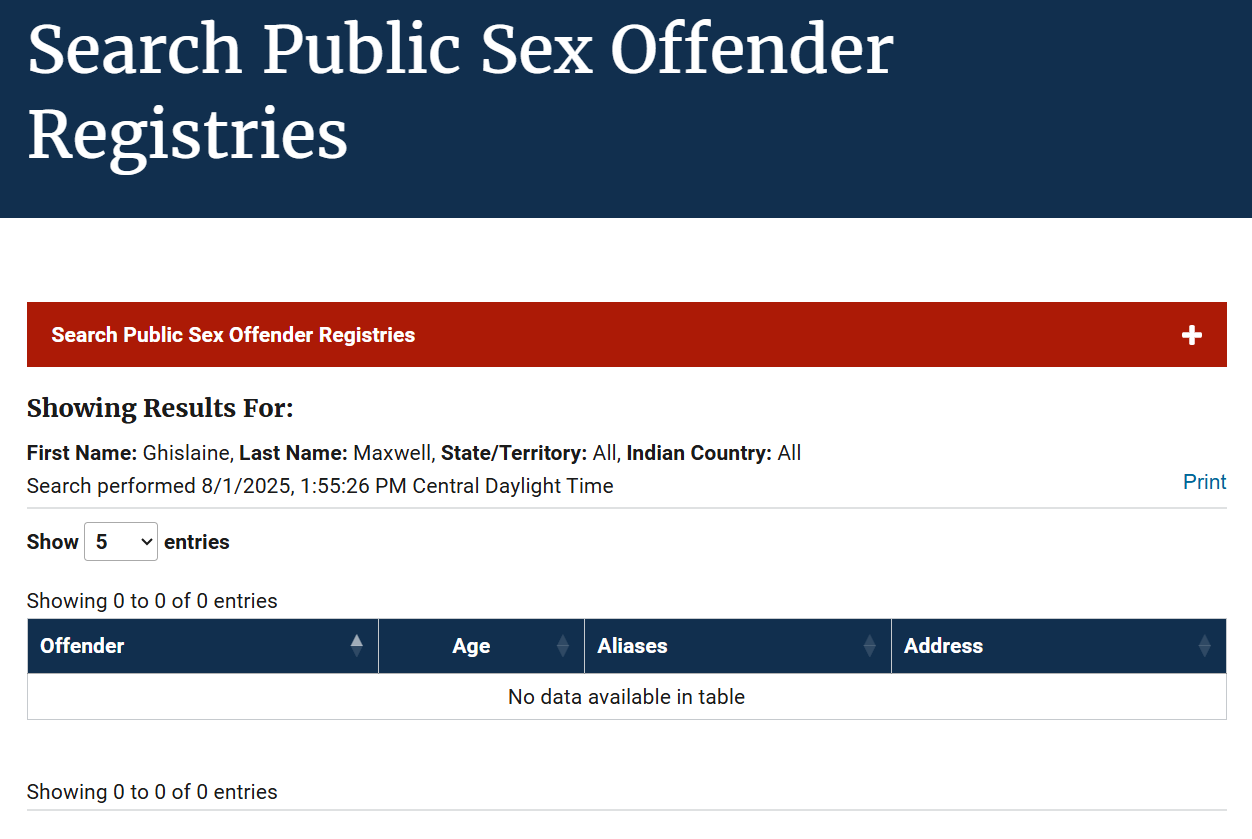
I've never checked the Federal Sex Offender Registry before, so it's possible I could be doing it wrong, but I'm turning up nothing when searching her name. https://www.nsopw.gov/
-
UAP Pentagon Report (UFOs, Foo Fighters, Commie Drones)
bolverk replied to Doc Reeves's topic in Daily Texan
While I personally don’t subscribe to many of the more out-there theories about ancient civilizations, I’m in complete agreement that those people were a lot more sophisticated than they’re often given credit for. And, yeah, it certainly seems there are periods in human history when technology and building techniques were lost to subsequent civilizations until having to be rediscovered by later ones. Like, for example, I think we only recently rediscovered the technique the Romans used for making concrete. One interesting ongoing debate I recently learned about is the possibility of a cave system underneath the pyramids that could reach back to a much earlier era and could signify the site as being holy to early peoples. If I’m remembering the details correctly, there might be an aquifer system down there that they had tapped into that some Scottish researchers are claiming to have found. Like I said, I like to watch/listen to these videos to reset emotionally and wind down, so I’m often halfway asleep while they’re running. Speaking of which, The Fall of Civilizations podcast is most excellent. -
Either way, it's not American, which is why it caught my eye.
-
Good catch. https://www.npr.org/2022/03/19/1087723875/kim-davis-court-same-sex-marriage .
-
UAP Pentagon Report (UFOs, Foo Fighters, Commie Drones)
bolverk replied to Doc Reeves's topic in Daily Texan
I like to watch YouTube videos about ancient history and civilizations before going to bed and, in fact, watched this one last night. While it doesn't address that particular site (which I've heard of), you might find this interesting in a general sense. We have a little-used Archeology Thread that I wish had more traffic. It'd be great to have some good discussions over there about this kind of stuff. Btw, I'm by no means an expert on any of this stuff, having only taken a single cultural anthropology class in undergrad, but the topic of ancient history and finding old mysterious shit is endlessly fascinating. Check this video out -- really cool stuff. -
Ghislaine "Sgt. Schultz" Maxwell: "I know NOTH-ING"
bolverk replied to Gil Bang's topic in Cloak Room
Maybe the women's prison in Bryan doesn't have CCTV. -
Uh, what kind of car is that?
-
I have no idea how they would even track that, because it plays no role whatsoever in how job counts are calculated. My first job out of grad school was producing these numbers at https://texaslmi.com/ back in the late 90s, so I'm very familiar with the process. The BLS then takes these numbers and more-or-less republishes them. Of course, they do their own stuff in DC, but the topline figures we read in the papers come from each state’s workforce commission, as shown at the link.