Leaderboard
The search index is currently processing. Leaderboard results may not be complete.
-
Rickylovesweed
Full Members148Points14673Posts -
closetojumping
Burnt Ends147Points15963Posts -
Getafix
Full Members126Points6960Posts -
Deej
Certifiably Surly101Points42828Posts


Popular Content
Showing content with the highest reputation on 12/21/23 in Posts
-
I'll post some thoughts on what was, what is, and what will still be in terms of the 2024 class for Texas and others in a bit. That said, Evans is absolutely above McKinley on Texas' list of priorities. He's a far better culture fit and he's plenty talented. Now that he's serious about Texas, this is a pretty big recruitment. I went from not caring about this guy as simple fodder for ATM's DL roster to now being willing to be really irritated if he finishes and signs with ATM because of the trend in his recruitment. I am as skeptical as anyone, but AD Mitchell isn't a foregone conclusion to go to the NFL unless I missed an update. He's under no pressure to do so from his seriously wealthy family. One thing that might be more instructive regarding the NIL impact is to look at the top 20 recruits nationally and who they signed with, versus, say the 2015 or 2019 classes. Parity is developing in recruiting, among tiers, and you can see it already impacting outcomes such as the playoffs, or what has happened to programs that have ignored NIL and the landscape shift. Think about Clemson, as an example. To be clear, the work will never end on NIL for football. It would take an endowment for the roster of something like $200M for that to go away. The roster is too big and the competitors/money/fervor/eyeballs are too big. That considered, the Texas NIL machine for football is rolling along far better than most, even if we're always playing from behind. No one predicted Georgia falling behind. I've talked about NIL here since before NIL opened up. Georgia is always going to be a have. The reason for that isn't a rabid and wealthy fanbase. That helps, sure, but the bigger reason is due to corporate density within relevant proximity to the school. No one predicted Alabama falling off immediately due to NIL because of their current position on the national landscape. We did discuss them struggling with it compared to Texas, Oregon, USC, Georgia and a few others. They don't have the same kind of money. And they have been impacted by that. They've struggled to keep up and they haven't won as many of the top of the list recruitments as they used to before NIL. Schools like LSU have been visibly impacted. They don't have the money to win many of the key battles that they otherwise would when the bag game was king. Clemson is actively denying NIL's existence, and that's harming them. There are other stories like these. While any competent HC at Texas should always be able to bring in top 10 classes, NIL is fundamental for exceeding that. The current class is underranked both relative to schools that Texas was up against for various players ranked lower than recruits that many powers paid passing attention to, but also due to the fact that Texas did not pursue a highly ranked QB in this cycle and did not take as many players as other programs due to low attrition. Nonetheless, it is top 5 to the public and we are splitting hairs on quality between Texas, Bama, and Georgia. Ohio State is ahead of Texas but they are the Tom Herman fantasy college football team in which they overload on WRs and DBs in every class and almost fully ignore OL and interior DL, which is showing up on the field now when playing quality opponents. Miami and Oregon are excellent examples of schools that are using a fuckton of money to win recruiting battles. FSU is another example of a school lacking some of the firepower necessary to offset a neighbor's wherewithal. Anyway, I would expect to see a more diverse field of competitors for the playoffs and titles. For most of a decade, it boiled down to Bama, Clemson, Ohio State, Georgia, Oklahoma and Michigan/LSU every now and then. Generally, you knew who the five teams were that would fill the four team playoff. This season, 20 teams could make arguments for being a contender before the season started and by season's end, there were still 7-8 teams that could do the same. That's NIL and the portal+NIL factoring in significantly.47 points
-
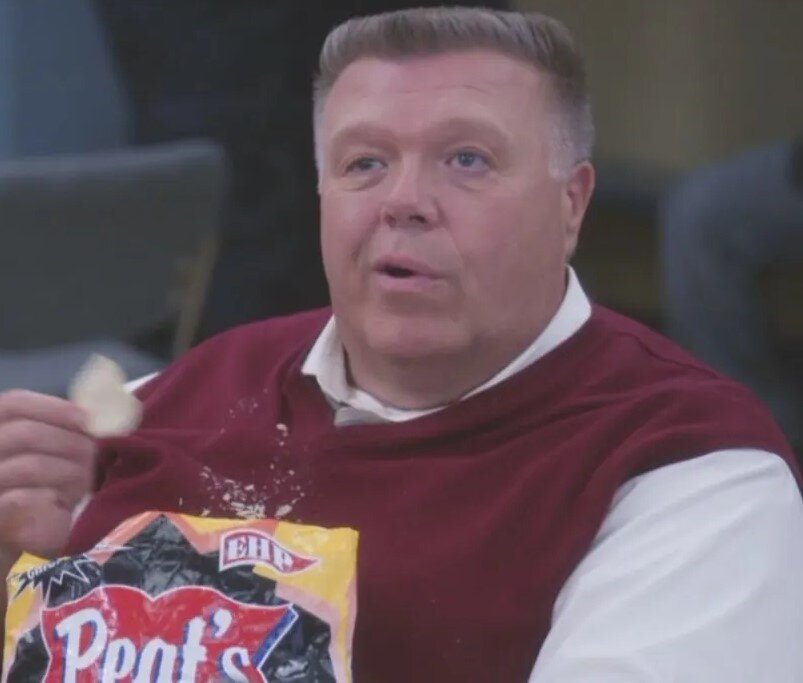
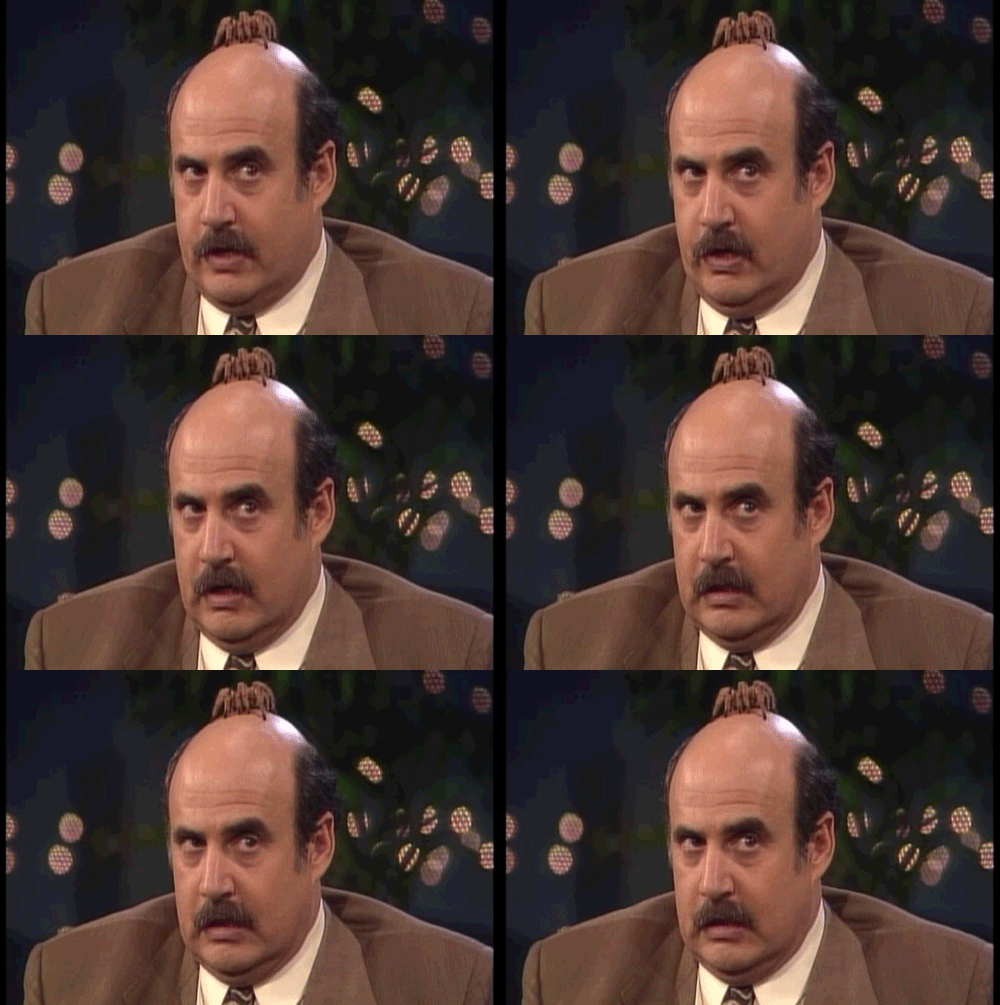
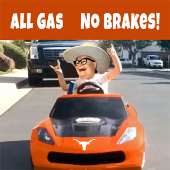
Maybe it’s just the season, but whenever you follow CTJ around the site forcefully parroting his takes, I always picture you as this little guy
 47 points
 -
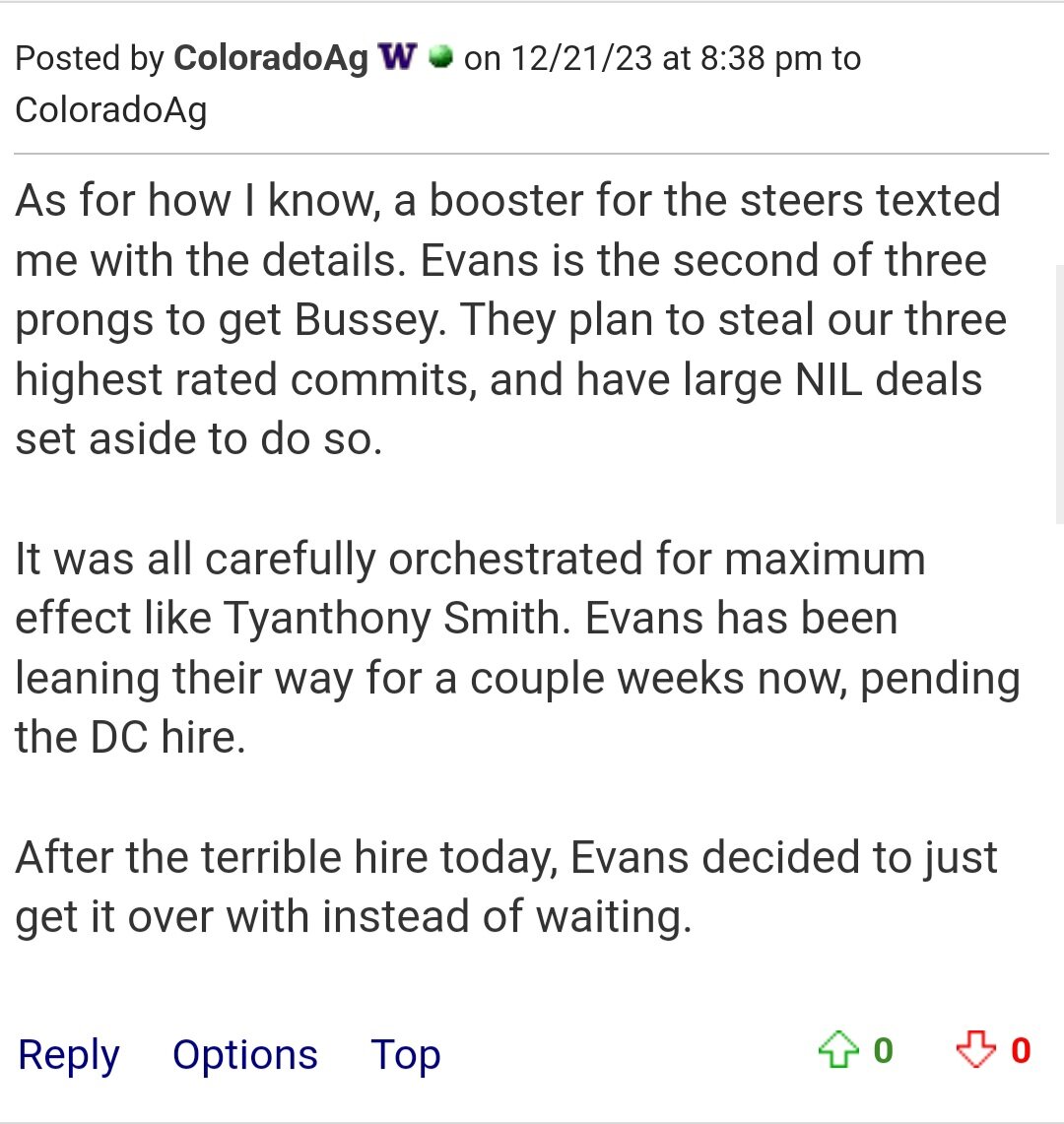
That mod at Rivals deleted the Evans tweet and then tweeted this. Sounds like Evans lied to him.39 points
-
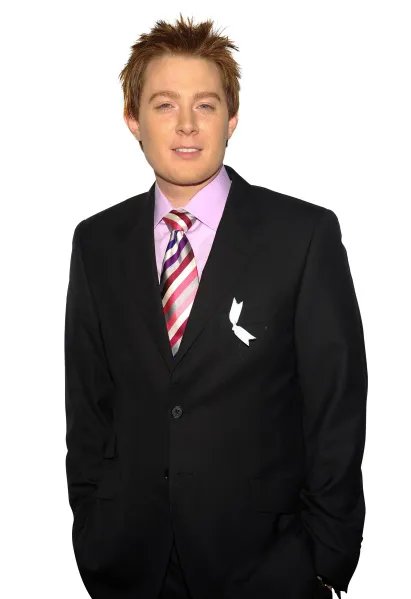
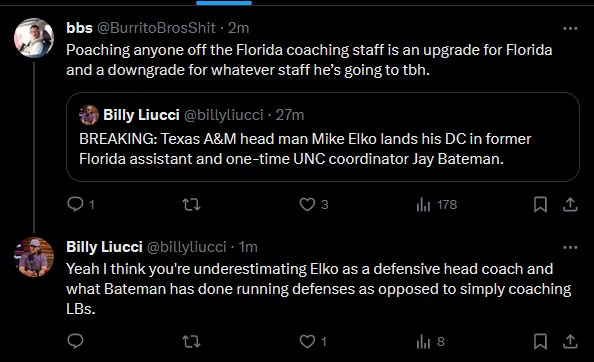
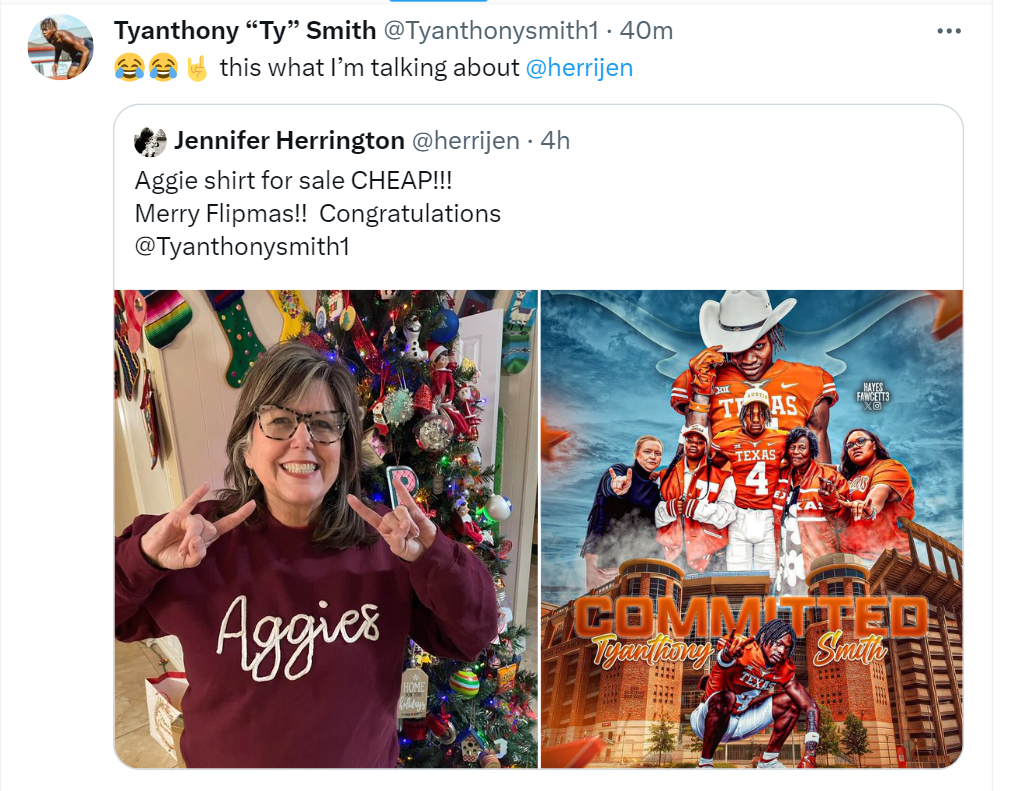
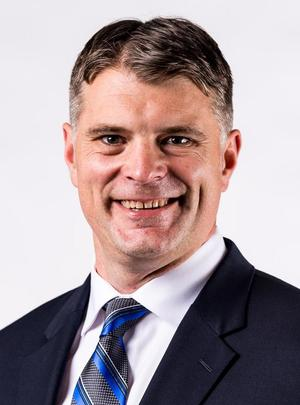
33 pointsFor those of us in this forum it is the two joys of schadenfreude and "I told you so" combined. We started stating immediately that the Fisher contract was absurd and would come back to bite them in the ass, then we told them that hiring mercenaries would backfire, then we told them that trying to finally ramp up the bag game as NIL was getting started was comically absurd. Throughout it all they insisted we were dumb and they were brilliant all led by their #1 idiotic grifter The Blooch. So now we are being vindicated while watching those morons implode. And they keep giving us ammo even while it's happening because they still refuse to admit that they were wrong and we were right. They know it but they are still desperately clinging to hope that they can somehow bend public perception to say the '22 class wasn't actually bought and paid for mercenaries but they really loved A&M. So they reject their first hire in an internet tantrum to hire the guy they foolishly believed could hold their roster and recruiting together. And he is pouring gasoline on the dumpster fire that is their program. All because they are too stupid and proud to ever publicly admit Texas fans were right. Which is exactly why it's okay for us to publicly and loudly share over and over again what mistakes they're making and how they should do it. Because the absolute best way for Texas fans to make sure A&M never does the right thing is for Texas to tell them what they should be doing instead. Every single time they have a decision to make they fuck it up because they don't want people to think they listened to Texas people or that they do things like Texas would do them.32 points31 pointsThe issue was a PFO. It came out of nowhere on September 12, 2022. It has been a bitch. I’ll fill you in sometime. https://my.clevelandclinic.org/health/diseases/17326-patent-foramen-ovale-pfo Thankfully, this wasn’t something that any aggy had any fucking thing to do with the issue. Hook ‘em!31 points31 pointsTexas and Alabama have some more important stuff to do in that time.30 points30 pointsDon't fucking fall for any of this propaganda. Wake the fuck up. This is an insidious plot to kill us all off via aggie misery overdose. Straight up Longhorn genocide. That's the only plausible explanation for what they have done to their program. It's like the Holocaust, but Hitler using Three Stooges movies instead of gas chambers. First they came for Jimbo, and I did not speak out because mother of god, they are actually going to pay a $76 million buyout. Then they came for Stoops, and I did not speak out because Texags is running their program and humiliating their AD. Then they came for Elko, and I did not speak out because holy shit that suit button is about to give up the ghost. Then they came for the Duke assistants, and I did not speak out because even they were like, "WTF? No way I'm moving to College Station." Then they came for E Rob, and I did not speak out because OMG he's actually recruiting guys to fucking Syracuse off their roster while he's the acting head coach. Then they came for the "NIL", and I did not speak out because the BMAs had to allocate that cash to paying off Jimbo. Then they came for the five stars, and I did not speak out because Lane Kiffin is trolling the hell out of them on twitter. Then they came for the committed recruits, and I did not speak out because Flipmas! Then they came for the no name comfort hire middling inside LB coach of a DOA Florida program who got shitcanned by Mack Brown and cheated at Army... and I just don't know how much more of this I can take. My biggest fear, outside of OD, is that I'm forever going to be chasing the dragon.30 points30 pointsMy only regret is we never got to see Sweat and Murphy absolutely destroy Bryce Foster & Co Every single fucking time I dont think the aggy destruction can get funnier and then they hired a dude who worked at Dunder Mifflin. Holy fuck this is hilarious30 points29 pointsKinda going under the radar, but they really are building this staff in their own image. Tell me this collection of men aren't at every single aggy tailgate that has ever existed:
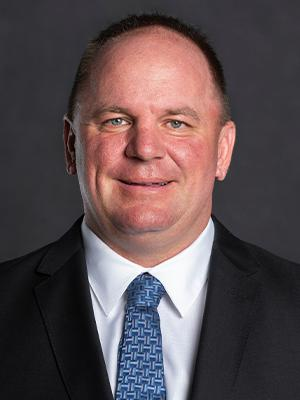
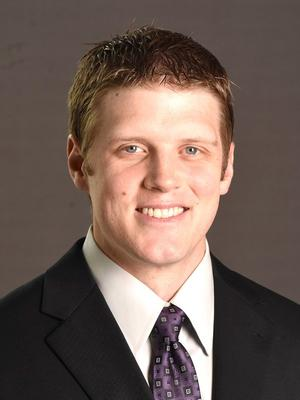
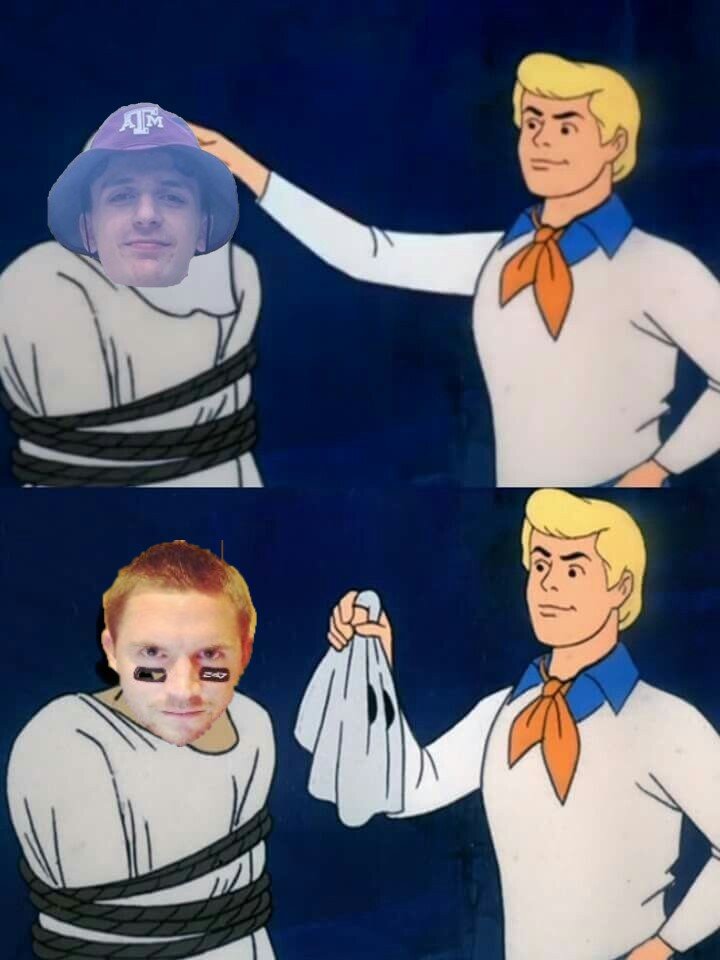
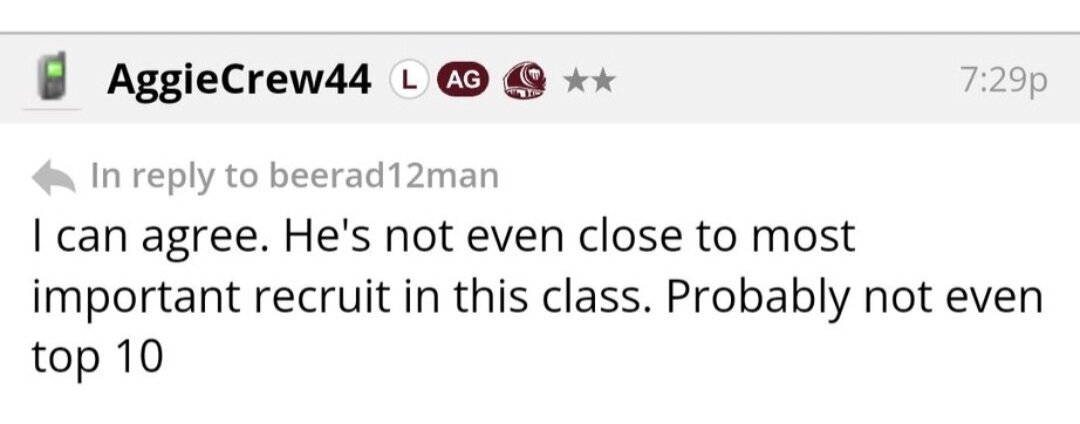
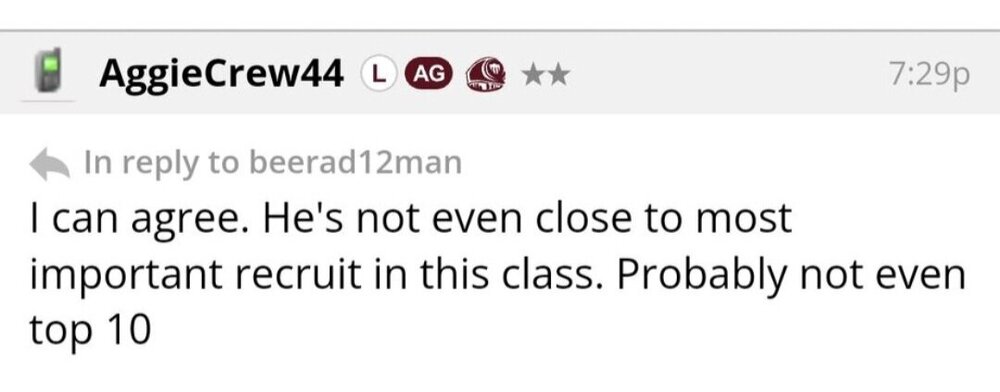
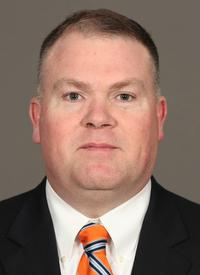 29 points29 pointsWelp, Christmas is a wrap. I don't really need anything else this year.29 points28 points28 pointsThere is a ton of optimism around this recruiting class as it relates to roster fit from folks that look at this more objectively than we do. Folks think they've done a great job of evaluating. Hampton got an upped offer from very little with Bama. "Well, you should sign with them if that's the case." As it pertains to what's left, McKinley is purely a vanity play. He's a momma's boy that could have graduated early and chose not to because she wanted him to have his senior year. They've asked programs about coaching approaches to addressing performance and how much "yelling" happens at practice. But, for the starfuckers, the guy is a 5 star by the services and it would be a win over LSU and a flip from ATM. Sarkisian wants him, at least. Evan is higher on the board and likes/loves football a hell of a lot more than McKinley. Butler is way more valued than Bussey. If they spend much more time on potention 2024 freshmen after this week, Butler is a more likely expenditure of that effort.27 points26 points26 points@immamacthis you because it's hilarious24 pointsThe judge said if I tweet at any more middle school kids, he is going to make me join the Coast Guard.23 points22 points22 points21 pointsI had to google. Apparently his dad was a comedian/writer/producer (lists his mother as also in the entertainment industry) who did well enough to leave LA in the early 2000's to move back to Houston to open a Non-profit org for HIV education/prevention. They still do philanthropy in and around the Houston area. Dad was at one time homeless and living in Central Park before getting his break as a comedian at the Apollo.21 points1) Absolutely against the guy coming to Texas even if he wanted to pay for other players' NIL and participate as a walk-on. 2) You know fully fucking well Stewart is too weak to change his circumstances with his circle. I have no sympathy. I cut people out of my world who were causing my future harm when I was younger than this idiot and more was personally on the line. 3) Like I said, he is highly likely to eventually be seeing himself at USC or Tennessee, where he will be a perfect fit. As I said above, I wouldn't take him if he were paying into the Texas One Fund to help others. I explain further, again, below. You should spend more time working on evaluations, then. Higher ceilings, that will be approached by performance, exist with at least 15 guys across the collegiate landscape in 2024. Nope. This is the problem with you, Wulaw, the other draft junkies and the unrealistic recruitniks who prefer to follow recruiting more than watching the actual games. Potential never pays the fucking rent. There is zero reason to be as enamored with Evan Stewart at this point as many of you are. The guy was skipping classes at ATM in month one of his freshman year. He continued with that shit for his duration there. He failed 3 different drug tests while on campus. He quit on his team in both of his seasons there, having to be talked back onto the field more than once. His inner circle leveraged him twice already for significant paydays. They're going to do it again because the guy has that ethereal potential. So maybe potential does pay the rent - for Stewart's dad, I guess. The guy dropped 4 passes this season in limited playing time. He had more than that his freshman year. He's a shit blocker. He's a social media diva. Why in the fuck do people insist on what-iffing a scenario for a malcontent with a proven history of underperformance and undercutting an organization's culture while doing so. Would any of you hire a guy like that? Right. But you'd want TOF and Sarkisian to do so? What the fuck? Like I said, USC and Tennessee are an on brand match for Stewart.21 points21 points21 pointsBateman power rankings 1) Patrick Bateman 2) Jason Bateman 3) Master Batman . . . . . Jay Bateman21 points21 pointsTheir self destruction this offseason will go down on the mount rushmore of aggy fuckups. There is no possible way paying $77 million to blow up your entire team, your current recruiting class, ruin your NIL engine, and hire a coach who is already failing at a Charlie Strong level just in time for Texas and OU to walk in the door of the conference is not among the all timers.21 points20 points20 points20 pointsHe really is a fucking scum bag, and the fact that no one cares about the legitimately awful things he's done because he's good at sports, but guys who were merely average got blackballed due to their politics is a gigantic indictment of our society.20 points19 points18 points18 pointsDidn't they only sign like 10 recruits?
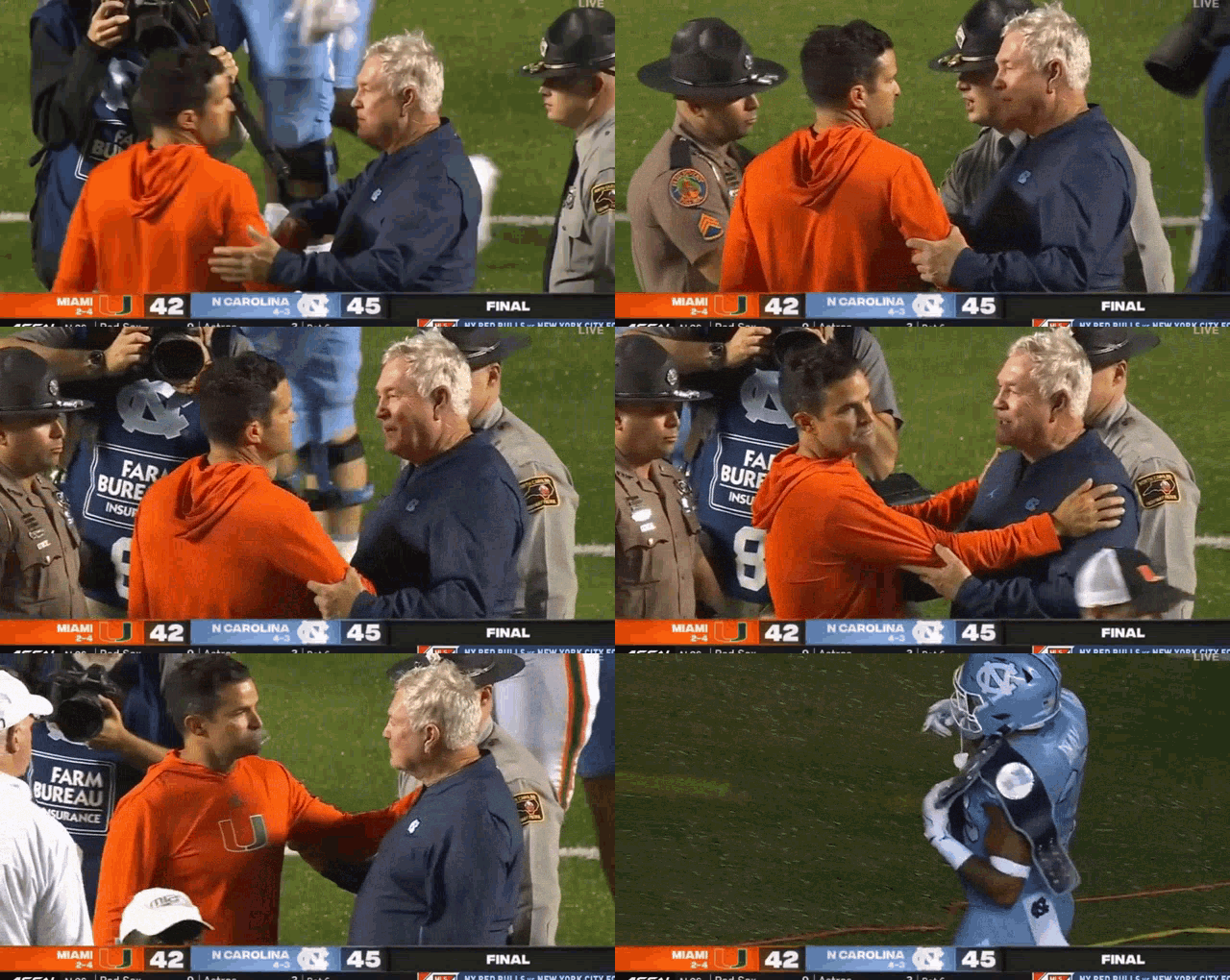
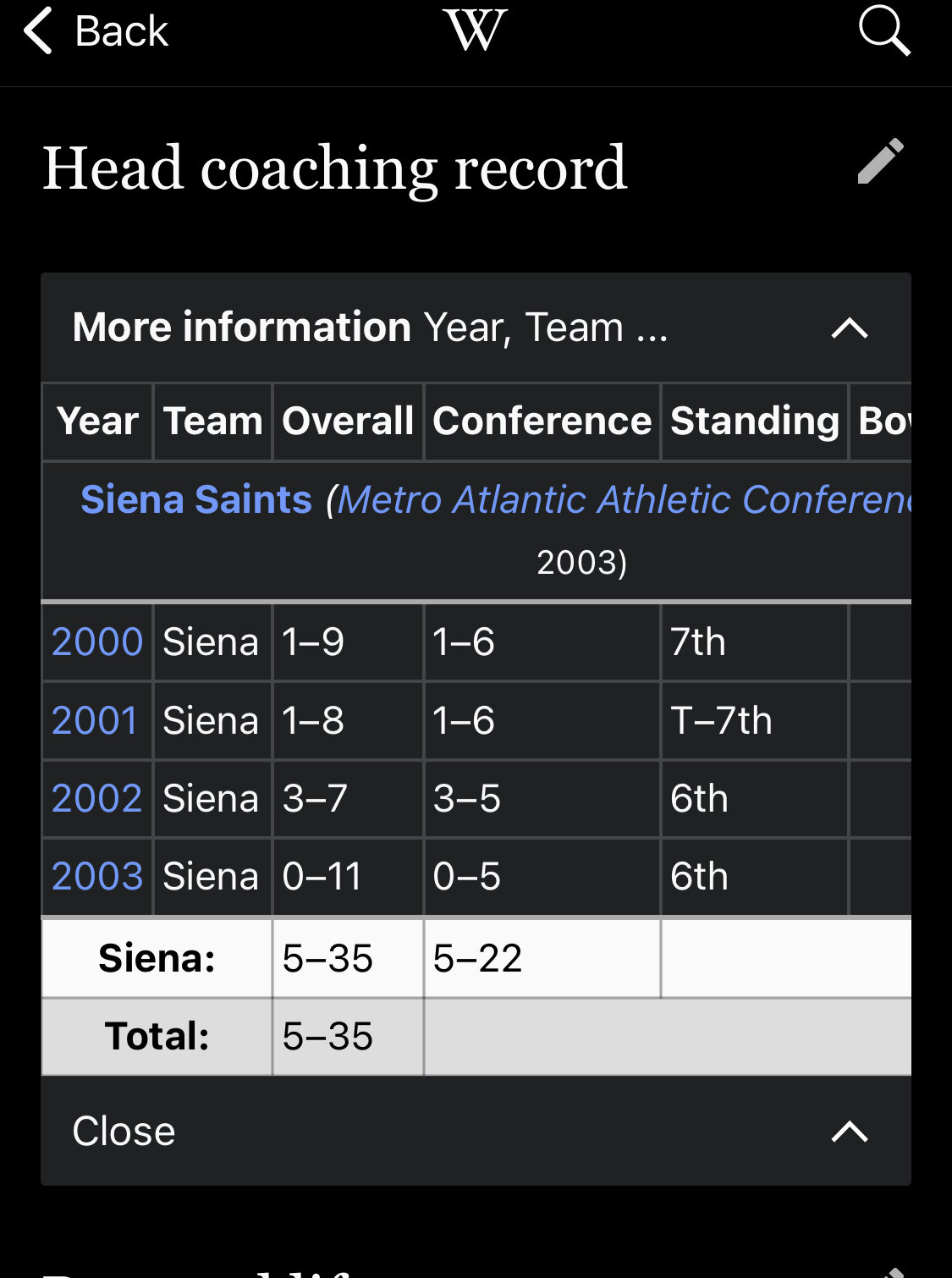
 18 points18 pointsDon't worry - this guy has this whole DC thing figured out.
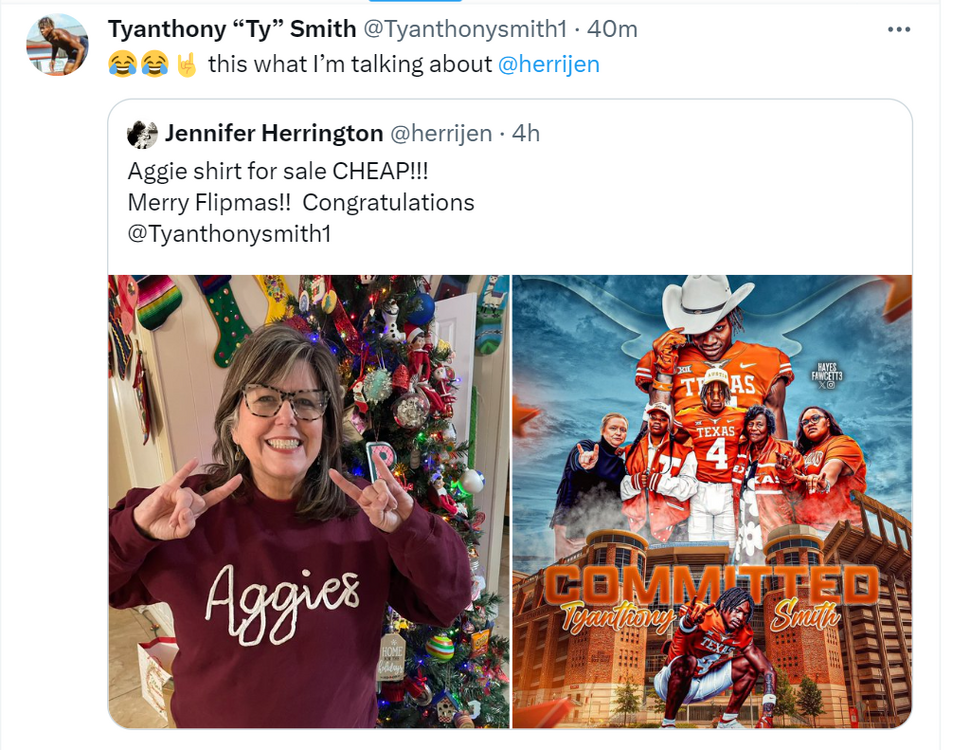
 18 points18 pointsWhy does watching the complete gutting of the A&M football program bring me so much joy?17 points17 points"Taysom Bateman is not only a great corch of young men, but a fantastic fit as a Texas Aggie. Whoop!" - Bud Sherrill, Asst Head Coach at Katy Sul Ross HS "Corch Bateman is a sitting SEC coach, so this is a win for Texas Aggies everywhere. Whoop!" - Tubby Elkman, Asst Head Coach at Katy E King Gill HS "Corch Elko's newest hire is not real well known, but Melk knows his stuff, so I trust that this young up and comer will make College Station lit again. Whoop!" - Gunny Norton, Asst Head Coach at Katy John Sharp HS17 points17 pointsLulz ... (Twitter appears to be acting up again - screenshot below)
 17 points16 points16 points16 pointsThis shows exactly how Blooch is still in business. They literally need someone to tell them what to think every day, since they are capable of holding opposing beliefs so easily. 1: Stars don't matter!!! Those rankings are BS! (No doubt driven by the BOMC) 1b: We are incredibly talented, you can tell because of all the high ranking players we have. 2: We have the most talented team in the country, forget onfield results, you can tell becuase of our past recruiting!!! 2b: that guy in the portal is not important - never really contributed anyway. 3: We are the richest school in the history of ever! Our donors mean our NIL is unstoppable! 3b: NIL is ruining college football. Those mean sips are overpaying. 4: (aTm player enters portal) These guys only care about money!!! 4b (aTM player comes back from portal) See! He loves us!!! 5: Nothing is more important than honor. 5b: Hire coaches that cheat and kill kids. 6: Jimbo is the best ever! Trust the process! 6b: Jimbo was dragging us down. The future is now bright! 7: E-Rob is the best! 7b Santucci Bateman is the best! I can't even keep track anymore...16 points16 pointsHoly shit, this is the guy they waited three weeks for? How many people must have told Elko no?16 pointsWe are truly witnessing the birth of Taylor Hamm 2.015 points15 points15 points15 points15 pointsWe should devote any resources that would be expended on Stewart, triple it, and put a full court press on Ryan Williams.15 pointsYou sick bastard. Don’t be mad at Ian Boyd. Be mad at yourself for reading Ian Boyd.14 points14 points14 pointsSo let me get this straight. Aggy didn't promote ERob because he was a position coach. They did ask him to coach the bowl game and keep the recruiting class together. The class turns into a disaster, and he actually took a couple of players with him. Flash forward two weeks. They hire a POSITION coach from the only other program that's as big of a dumpster fire as them?!?! Holy crap. Some of my elementary students have better decision-making skills.14 points... posting in case you haven't seen the Dicker the Kicker bit which dropped a short time ago.14 pointsThis leaderboard is set to Chicago/GMT-06:00Football ... Basketball ... Baseball ... Other Sports ... Futbol ... 🤫995🤫 ... Gambling ... Movies & TV ... Music ... Hobbies ... Lulz ... Food & Travel ... Daily Texan ... Business & Markets ... Cloak Room ... Help ... For Sale ... Board Discussion ... Advertise... Tailgate Donations
Account
Search
Configure browser push notifications
Chrome (Android)
- Tap the lock icon next to the address bar.
- Tap Permissions → Notifications.
- Adjust your preference.
Chrome (Desktop)
- Click the padlock icon in the address bar.
- Select Site settings.
- Find Notifications and adjust your preference.
Safari (iOS 16.4+)
- Ensure the site is installed via Add to Home Screen.
- Open Settings App → Notifications.
- Find your app name and adjust your preference.
Safari (macOS)
- Go to Safari → Preferences.
- Click the Websites tab.
- Select Notifications in the sidebar.
- Find this website and adjust your preference.
Edge (Android)
- Tap the lock icon next to the address bar.
- Tap Permissions.
- Find Notifications and adjust your preference.
Edge (Desktop)
- Click the padlock icon in the address bar.
- Click Permissions for this site.
- Find Notifications and adjust your preference.
Firefox (Android)
- Go to Settings → Site permissions.
- Tap Notifications.
- Find this site in the list and adjust your preference.
Firefox (Desktop)
- Open Firefox Settings.
- Search for Notifications.
- Find this site in the list and adjust your preference.